We are one of the top IT Solutions companies in Malaysia. We inspire and help local companies accelerate digital transformation to be competitive globally. We specialized in app, system, and game development.
3D-powered business mobile apps are essential for engaging end customers in construction, property, fashion, transportation, events, and more. As businesses compete for attention in crowded digital markets, three-dimensional visuals deliver the kind of immersive, interactive experience that flat interfaces simply cannot match.
For your information, our gaming subsidiary company Gempak Sdn. Bhd. is known as Gempak Games.
What Is 3D Mobile App Development?
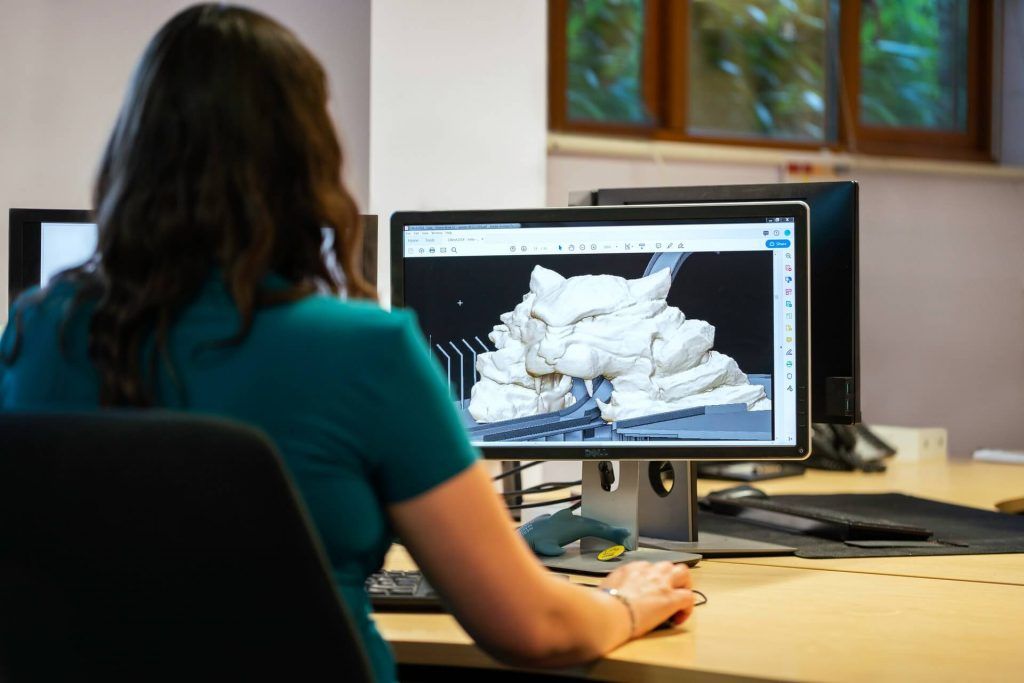
3D mobile app development involves building applications that render three-dimensional graphics in real time on smartphones and tablets. These apps use rendering engines such as Unity or Unreal Engine to present objects, environments, and animations that users can rotate, zoom, and interact with directly on their screens.
Common use cases include product configurators for furniture and automotive companies, architectural walkthroughs for property developers, virtual try-on features for fashion and eyewear brands, and interactive training simulations for industrial sectors. In Malaysia, industries like construction, real estate, and retail are rapidly adopting 3D apps to give customers a richer understanding of products and spaces before making purchasing decisions.
The technology relies on GPU-accelerated rendering, optimised 3D model assets (often in glTF or FBX formats), and platform-specific APIs such as Apple’s ARKit and Google’s ARCore for augmented reality overlays. Getting these components to work together smoothly on a wide range of devices requires deep technical expertise.
Why Work With Us?
Advisory Apps has been delivering custom software solutions from our Kuala Lumpur office since 2012, completing over 200 projects across mobile apps, web platforms, and game development. Our 3D development capability is powered by the same team behind Gempak Games, giving us a rare combination of enterprise software discipline and creative game-studio craftsmanship.
- Winner of SME100 Fast-Moving Companies in 2019
- Experienced 3D and games developer
- Award-winning designer
- 5G enabled future-proof development
- Free professional consultation
- Full 3D mobile apps and web apps development life cycle covered: From requirement gathering, mockup, design, development, iteration, bug fixing, and publishing
- Trusted and quality assurance
- 1-year free warranty* (vary among different proposals)
How We Build 3D Mobile Apps
Our development process follows a structured lifecycle that keeps projects on track:
- Discovery and consultation — We analyse your business goals, target audience, and technical requirements at no cost.
- Concept design and prototyping — Our designers produce wireframes and low-fidelity 3D mockups so you can validate the experience before any code is written.
- Asset creation and optimisation — 3D models are built or adapted, then optimised for mobile GPU constraints to ensure smooth frame rates even on mid-range devices.
- Development and integration — The app is developed natively or cross-platform, integrating with your existing back-end systems, analytics, and payment gateways as needed.
- QA, publishing, and support — Rigorous testing on real devices is followed by app store submission and a post-launch warranty period.
Our 3D Stack: Unreal / Unity on Mobile, Three.js on the Web
For our current 3D mobile app projects, we build the runtime in Unreal Engine or Unity and pair it with a custom admin panel that lets non-technical staff manage 3D assets directly from a browser. This pattern gives the client a fast, polished 3D experience on the phone without locking them out of day-to-day asset updates.
The architecture looks like this:
- Mobile runtime — the iOS and Android app is a thin Unreal Engine or Unity client that renders 3D models in real time on mid-range devices.
- Asset management admin panel — a web dashboard that accepts 3D model uploads in common interchange formats (glTF / GLB, FBX, OBJ) along with textures and materials. Operators can tag, version, and publish assets without touching code or waiting for a new app release.
- Programmatic asset loading — the mobile app pulls 3D assets from the admin panel at runtime instead of bundling every model into the binary. New products, colour variants, and material finishes go live within minutes of being uploaded, and customers see them on the next app launch.
- CDN-backed delivery — assets are served from a CDN and cached on device, so first-time loads stay fast and repeat sessions feel instant.
This is exactly the pipeline that powers our DK Schweizer leather seat configurator, a 3D mobile app for a high-end automotive leather supplier. End customers can switch between dozens of leather colours, stitch patterns, and seat styles on a vehicle seat in real time, and the DK Schweizer team can add new leather swatches or seat models through the admin panel without any developer involvement. The same architecture scales cleanly to other visual-configurator use cases in furniture, eyewear, footwear, and watches.
On the web side, we typically build browser-based 3D experiences in Three.js — the most mature WebGL library in 2021. A Three.js viewer reads the same glTF / GLB assets managed in the admin panel, so clients get a consistent 3D experience across their app and website without maintaining two separate asset pipelines.
Our Portfolio
Browse more of our delivered work in our portfolio to see how we bring 3D experiences to life for Malaysian and international clients.
Get Started
Ready to discuss your 3D app idea? Contact us for a free consultation, or drop us a message using the live chat on this website.