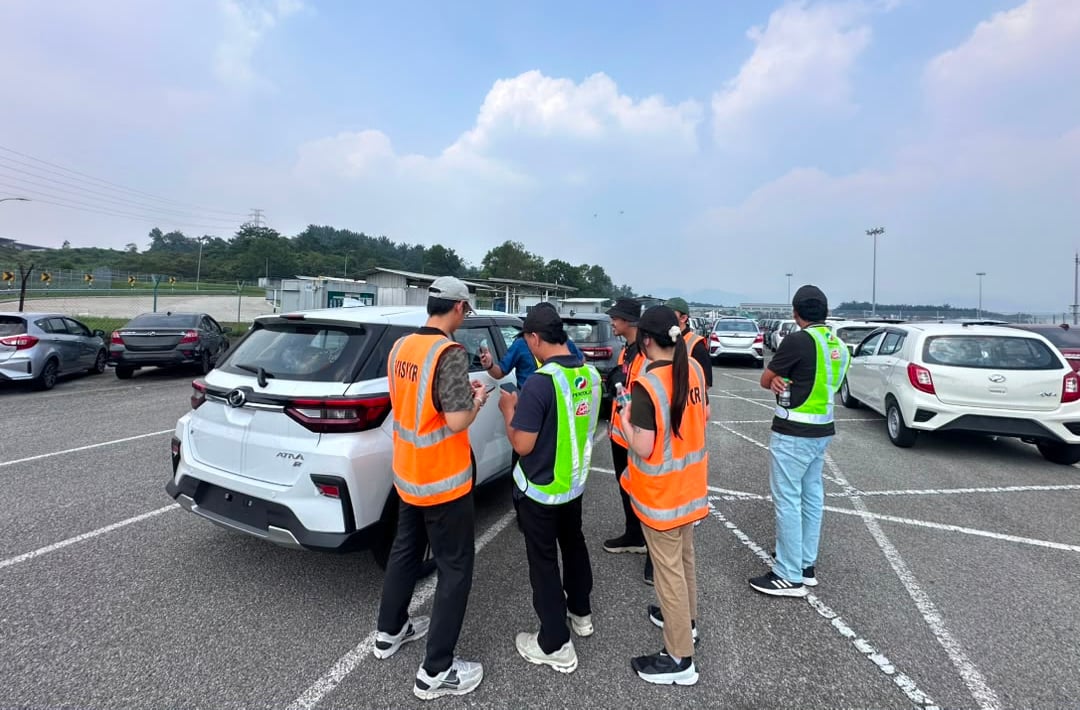
A good app development company in Malaysia will have a shipped portfolio with named clients, an in-house team you can meet, a written post-launch warranty, transparent MYR pricing, cross-industry experience, real technical depth beyond Figma screens, and a physical office you can walk into. Everything else is marketing. This guide turns those seven signals into concrete checks you can run on any shortlist before you send a brief.
Why Do These Seven Signals Matter?
Malaysia has hundreds of shops calling themselves an app development company, ranging from one-person freelancers in Subang to 200-person enterprise vendors in KLCC. The spread in quality is enormous, and the cost of picking wrong is measured in six-figure write-offs. These seven signals are the cheapest filters — you can verify all of them in under an hour of desk research, before any sales call. Advisory Apps has delivered 200+ projects and 80+ mobile apps since 2012, and every bad brief we inherit from another vendor failed at least four of these checks.
Signal 1: Do They Have a Shipped Portfolio With Named Clients?
A real mobile app development partner can show you apps that are live on the App Store and Google Play today, under clients’ real brand names, with real download counts. Generic “for a major bank” case studies are a red flag — if the work was real and the NDA reasonable, the client’s name is usually disclosable.
What to check:
- Store links that actually open on your phone, not dead Play Store URLs.
- At least three apps in different categories (not five variations of one template).
- Review counts and ratings you can sanity-check against traffic claims.
- A mix of B2C and B2B, consumer and enterprise.
Advisory Apps’ public portfolio includes Perodua’s customer retention app with eKYC and QR scanning, and MyJPJ — the road tax and driving licence platform serving millions of Malaysian motorists. If a vendor cannot point to equivalent public proof, assume the work does not exist.
Signal 2: Is the Team In-House or a Reselling Front?
Ask directly: “How many developers do you employ full-time in Malaysia, and can I meet them?” A shocking number of local agencies are two-person sales fronts that subcontract to Vietnam, India, or Bangladesh on every project. That model is not inherently bad, but you deserve to know — because your project’s risk profile, IP protection, and communication lag all change.
Red flags:
- LinkedIn shows three employees but the website claims “50+ experts”.
- No technical staff introduced on discovery calls.
- Rates that undercut local salary floors (nobody in KL ships quality Flutter work for RM 8,000 per month).
Green flags:
- You get introduced to the actual tech lead before signing.
- The company has a physical office you can visit.
- Developer names in the proposal match names in the project kickoff.
Signal 3: Is There a Real Post-Launch Warranty?
A good app development company in Malaysia writes warranty terms into the SOW, not into a verbal promise. Industry standard in 2025 is a 60-to-90 day bug-fix warranty covering anything that was working at user acceptance testing, plus an optional retainer for ongoing maintenance. Anything less than 30 days means they expect to walk away the moment the invoice clears.
Specifically ask:
- How long is the bug-fix warranty after go-live?
- Does it cover OS upgrades (iOS 19, Android 16) released within the warranty window?
- What is the SLA for critical bugs — hours, or weeks?
- What does a maintenance retainer cost, and is it month-to-month?
Signal 4: Do They Have Cross-Industry Experience?
Vendors who have only ever built one kind of app — say, F&B delivery clones — will silently force your project to look like every other project they have done. Cross-industry experience means the team has seen enough failure modes to push back on your assumptions. Advisory Apps has shipped across automotive (Perodua), government (MyJPJ), energy (SolarooEV EV charging with OCPP), IoT (Zlock smart parcel lockers), healthcare (MedicalMet), and manufacturing (DK Schweizer 3D leather configurator). That breadth is what lets a team tell you when your requirement is unusual, versus when you are reinventing a solved problem.
Signal 5: Is the Pricing Transparent in MYR?
Good vendors will quote in Malaysian ringgit, with a fixed scope or a clear time-and-materials rate card, and will tell you what is excluded. Typical 2026 MVP ranges for a Malaysian app development company — timelines reflect AI-assisted development, which has cut build time by roughly 30–50% versus a few years ago:
| Project type | Typical MYR range | Timeline |
|---|---|---|
| Simple MVP (1 platform, 1 backend, basic auth) | RM 60k – RM 120k | 1–2 months |
| Standard app (iOS + Android + admin panel) | RM 120k – RM 250k | 2–4 months |
| Complex app (payments, maps, real-time, integrations) | RM 250k – RM 500k | 3–5 months |
| Enterprise platform (custom backend, SSO, compliance) | RM 500k+ | 4–9 months |
If a vendor refuses to give a ballpark before the seventh discovery call, they are either fishing for your budget or do not have standardised estimates. Both are bad. A transparent app development partner will share rough ranges within the first meeting and firm them up after a paid discovery.
Signal 6: Do They Have Technical Depth Beyond the UI?
A worrying number of Malaysian “app companies” are really UI design studios with a junior React Native contractor on speed dial. They will deliver gorgeous Figma files and a fragile app that falls over the first time it meets a real backend. Technical depth shows up in questions they ask you:
- What is your API contract and who owns it?
- How are you handling authentication — OAuth, SSO, biometric?
- What is the offline/sync strategy?
- How will payments reconcile with your ERP or accounting system?
- Are we doing native, Flutter, or React Native, and why?
If the sales call spends 40 minutes on screen mockups and zero on architecture, you are hiring a design agency. That is fine if you need a pitch deck — not fine if you need a production system.
Signal 7: Is There a Local Presence for Real Meetings?
Remote-first is real, but enterprise deals in Malaysia still close in person. A local office in KL, Selangor, Penang, or JB matters for:
- In-person kickoff workshops where requirements actually solidify.
- Escalation meetings when something goes wrong (and something always does).
- Stakeholder alignment with non-technical execs who do not like Zoom.
- PDPA and data handling conversations that need signed NDAs and physical document review.
A vendor headquartered in another country with no local entity means you have no Malaysian legal recourse if the project collapses. That is a large, silent risk.
Ready to Shortlist With Confidence?
Running these seven checks on a shortlist of three to five vendors will save you months of pain and likely six figures in rework. If you want a second pair of eyes on your shortlist, your brief, or your budget, book a free consultation with Advisory Apps — 14 years in KL, 200+ projects shipped, and a tight-knit in-house team you can actually meet.