Case Study
·2021
GoLive Asia
Sustaining 30,000 Requests Per Second for Live Event Ticketing
A mobile-first event discovery and ticket booking platform built for extreme traffic conditions — featuring multi-layer CDN caching, QueueIT virtual waiting room, distributed cache with stampede protection, and auto-scaling cloud infrastructure across GCP and AWS.
30K+
Requests Per Second
1,000+
Events Listed
2
Mobile Platforms
90%
CDN Cache Hit Rate
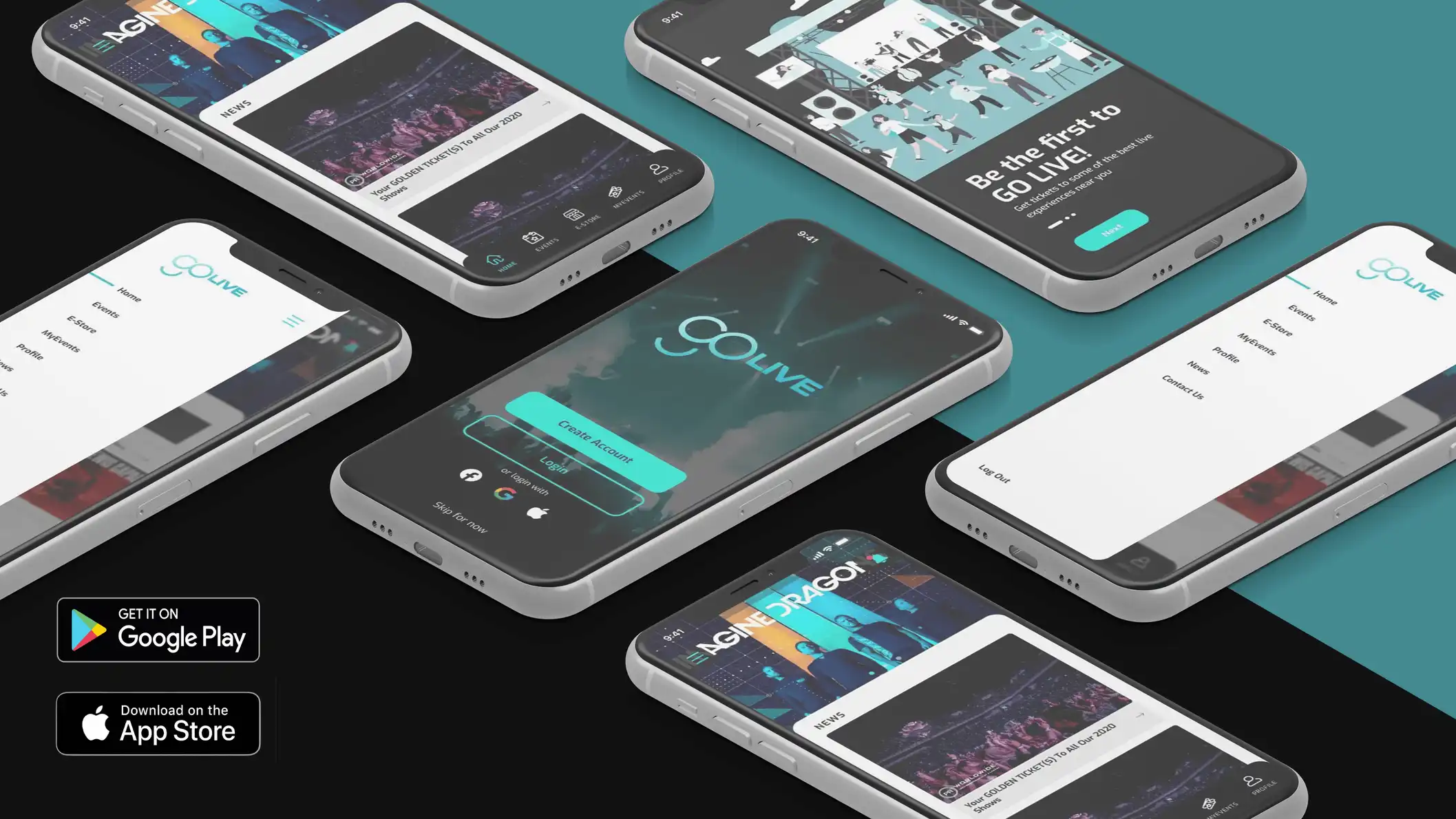
The Challenge
High-stakes ticketing under extreme traffic conditions
GoLive Asia needed to transition from third-party ticketing platforms to their own purpose-built solution. The existing approach meant per-ticket variable costs with no customer data retention, making it impossible to build a loyal user base or control the booking experience. However, building an in-house platform introduced a far greater technical challenge: handling the extreme traffic spikes that occur when popular event tickets go on sale — where tens of thousands of users attempt to purchase simultaneously within a 2-minute window, often overwhelming even well-provisioned infrastructure.
No Own Ticketing Platform
Reliance on third-party ticketing platforms meant per-ticket variable costs, no customer data ownership, and no control over the booking experience or brand presence.
Flash Traffic Spikes
Popular event tickets go on sale at a fixed time — generating tens of thousands of concurrent requests as users attempt to purchase simultaneously within a 2-minute window.
Limited Infrastructure Budget
The platform needed to sustain massive traffic spikes without over-provisioning — maximising existing cloud resources while keeping infrastructure costs viable for a growing business.
The Solution
Multi-layer infrastructure built for 30K requests per second
Advisory Apps engineered a multi-layer defence architecture spanning two cloud providers: AWS CloudFront for edge caching, WAF protection, and DDoS mitigation at the perimeter, with GCP App Engine providing auto-scaling application instances backed by Redis cache and MySQL with dynamic read replicas. During high-demand events, QueueIT virtual waiting room controls user flow at the entry point — releasing users in managed batches to prevent backend overload. A custom distributed lock mechanism at the Redis layer eliminates cache stampede, ensuring only one request queries the database while thousands of concurrent requests wait for the cached result.
Multi-Layer CDN & WAF Shield
AWS CloudFront CDN with WAF rules providing DDoS protection, bot blocking, OWASP filtering, and aggressive edge caching — serving over 90% of traffic without reaching the origin server.
Virtual Queue & Controlled Access
QueueIT virtual waiting room deployed during high-demand events to regulate user flow into the transactional system — preventing server overload by controlling concurrency at the entry point.
Distributed Cache with Stampede Protection
Redis cache layer with distributed lock mechanism preventing cache stampede — only one request queries the database while concurrent requests wait for the cached result.
Auto-Scaling Event Infrastructure
GCP App Engine scaling from 1 to 600 instances with MySQL read replicas expanding from 2 to 80 — pre-scaled using historical traffic data before each major event sale.
System Architecture
The platform spans two cloud providers — AWS for edge security and caching, GCP for application logic and data. During high-demand events, QueueIT regulates user flow before requests reach the origin infrastructure.
Web App
Mobile-Responsive
Mobile App
iOS & Android
AWS CloudFront + WAF
DDoS Protection • Bot Blocking • OWASP Rules • Rate Limiting
QueueIT Virtual Waiting Room
Controlled user release • Concurrency management • Fair queuing
GCP App Engine (Auto-Scaling)
Main API (1-600) • Shop API (1-5) • Admin (1-2) • Web App (1-40)
Redis Cache
1-11GB • Distributed Locks
Cloud SQL MySQL
Master + 2-80 Read Replicas
2C2P Payment
FPX • Cards • Banking
Firebase
Notifications • Analytics
Cloud Storage
Media • Assets
Traffic Pattern During Ticket Sales
When tickets go on sale at a fixed time, traffic spikes dramatically within a 2-minute window. Users begin arriving minutes before the sale opens, creating a sharp surge that peaks at the exact sale time and tapers off shortly after.
Typical traffic distribution during a high-demand ticket sale event
Cache Stampede Protection
When cache expires during peak traffic, hundreds of simultaneous requests can flood the database — causing timeouts and cascading failures. The distributed lock mechanism ensures only one request rebuilds the cache while all others wait.
Before — Cache Stampede
1,000+ Concurrent Requests
Database
All requests query DB simultaneously
DB Timeout • 2.4s queries • Metadata locks
After — Distributed Lock
1,000+ Concurrent Requests
Redis Lock Gateway
1 request acquires lock • others wait
Database (1 query)
Result cached • all others served from cache
Sub-100ms response • Zero DB overload
Request Lifecycle During Event Sales
How a ticket purchase request flows through the multi-layer infrastructure — from the user's device through CDN edge cache, virtual queue, WAF protection, application cache, and finally the database.
Step 1
User Opens App
Browses events or opens ticket sale page
Step 2
CDN Edge Cache
90%+ of read requests served from CloudFront edge
Step 3
QueueIT
Users queued and released in controlled batches
Step 4
Redis Cache
Check Redis first; if miss, acquire distributed lock
Step 5
Database Query
Only 1 locked request queries MySQL; result cached for all
Traffic Distribution
Over 90% of all traffic is served from CloudFront edge cache
Implementation Timeline
Phase 1
Platform Foundation
Phase 2
Payment & Ticketing
Phase 3
Traffic Optimisation
Phase 4
Scale & Hardening
Methodology
Performance-first engineering with iterative hardening
The project followed an iterative cycle of optimise, load test, analyse, and optimise again — working closely with the client's team and infrastructure partners to progressively harden the platform for increasingly demanding traffic scenarios. Each phase delivered a working increment while building toward the full-scale capacity required for major event launches.
Discovery & Architecture
Traffic pattern analysis, cloud provider evaluation, CDN vs origin cost modelling, and infrastructure capacity planning for peak event scenarios.
Core Platform Build
Event management CMS, ticketing engine, QR validation crew app, and payment gateway integration with 2C2P across multiple payment methods.
Performance Engineering
Multi-layer caching implementation, cache stampede fix with distributed Redis locks, QueueIT integration, WAF rule tuning, and feature flag system.
Load Testing & Launch
Simulated peak traffic spikes, auto-scaling verification across App Engine and database replicas, pre-scaling runbook creation, and dedicated monitoring setup.
Key Features Delivered
Event Discovery & Booking
Browse and search events by location, date, and category with real-time seat availability, instant booking confirmation, and digital ticket delivery.
QR Code Ticket Validation
Dedicated crew app for scanning QR tickets at venue entry points — instant validation against the booking database with offline fallback capability.
2C2P Payment Integration
Multi-method payment gateway supporting bank transfer (FPX), credit cards, and online banking with automated reconciliation and refund processing.
CloudFront CDN with WAF
AWS CloudFront serving over 90% of all traffic from edge cache with WAF rules blocking bots, DDoS attacks, and rate-limiting abusive IP ranges.
QueueIT Virtual Waiting Room
Virtual queue system activated during high-demand sales to control user concurrency — releasing users in managed batches to protect backend infrastructure.
Feature Flag Event Mode
Admin-controlled toggle to reduce non-essential operations during peak ticket sales — preserving origin capacity for critical transactional workflows.
The Results
Measurable performance under extreme load
30K+
Sustained Requests Per Second
Platform handles 30,000 concurrent requests per second during peak ticket sales without degradation.
1.8M
Hits Per Minute Capacity
Infrastructure capacity tested and sustained at 1.8 million hits per minute during live event sales.
90%
Traffic Served from CDN
Aggressive CDN caching ensures only 10% of traffic reaches the origin server — reducing infrastructure costs and latency.
0
Downtime During Optimised Events
Zero downtime achieved during event sales after implementing multi-layer caching, QueueIT, and auto-scaling.
Modules Used
Built with production-ready modules
This project leverages our library of battle-tested modules — each independently scoped, tested, and deployed across multiple client projects.

Event Ticketing
End-to-end event management with ticket sales, QR check-in, and seating

Payment Gateway Hub
Unified payment abstraction over FPX, credit cards, e-wallets, and regional payment methods

QR Code Management
Generate, customize, and track QR codes with dynamic URLs, scan analytics, and bulk creation

Push Notification Engine
Multi-channel push notifications with segmentation, scheduling, and analytics

User Management
Unified user profiles, role-based access, and secure authentication

Single Sign-On (SSO)
SAML 2.0 and OAuth 2.0 federation with Google, Microsoft, Apple, and custom identity providers
Conclusion
High-performance ticketing, delivered at scale
The GoLive Asia platform demonstrates what's achievable when infrastructure engineering is treated as a first-class concern from day one. By combining AWS CloudFront's edge caching and WAF protection with GCP's auto-scaling App Engine, Redis distributed locking, and QueueIT virtual queuing, we built a ticketing platform that sustains 30,000 requests per second during peak sales — with zero downtime and over 90% of traffic served from CDN edge cache.
The iterative approach of optimise, load test, and harden proved essential — each major event provided real-world data that informed the next round of infrastructure improvements. Working collaboratively with the client's team and infrastructure partners, the platform evolved from handling modest traffic to sustaining 1.8 million hits per minute under extreme flash-sale conditions.
Future Outlook
- Dynamic pricing and demand-based ticket allocation for event organisers
- Expanded analytics dashboard providing real-time sales insights and audience demographics
- Multi-region CDN expansion for broader Southeast Asian market coverage
Services Used
Capabilities behind this project




Want similar results for your business?
Let's discuss how we can build a custom solution tailored to your needs.
Get a Free Consultation